
Viktor Brooks · 16 October 2026
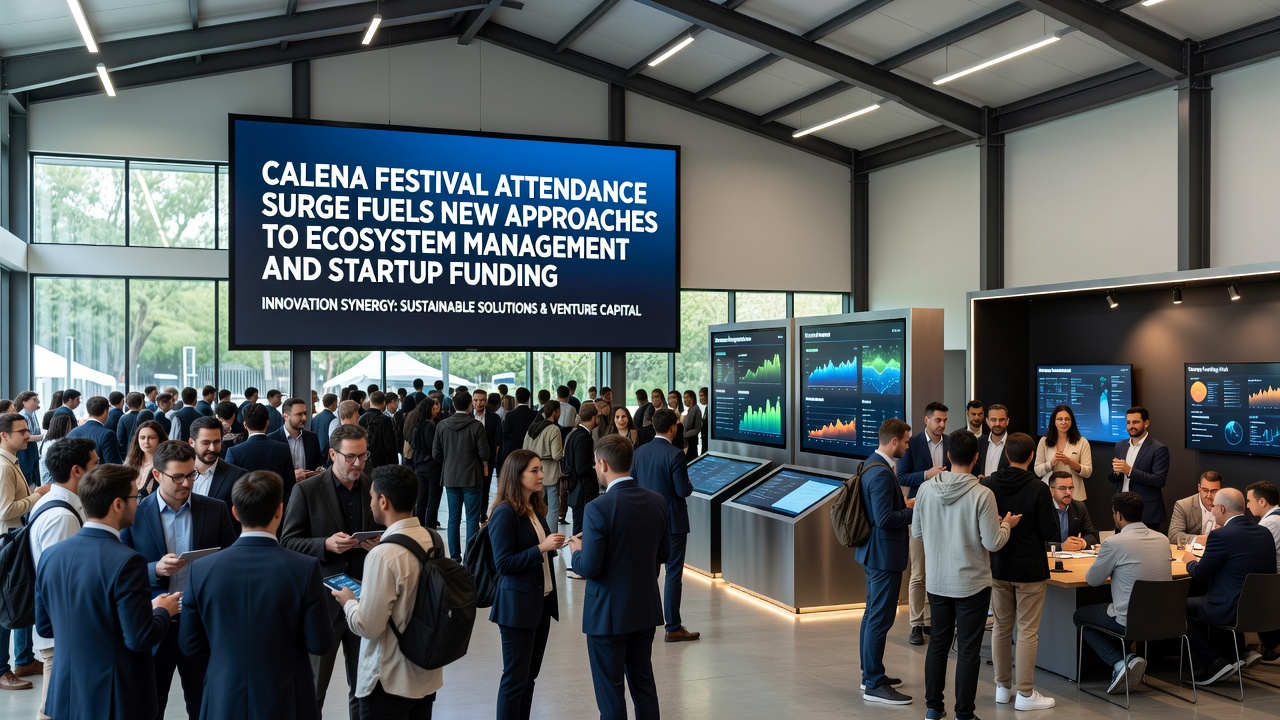
Calena's Record Festival Turnout Sparks Fresh Strategies for Ecosystem Oversight and Startup Capital Access
Calena's annual festival recorded a significant increase in visitor numbers during the October 2026 edition, with attendance figures reaching 245,000 according to local tourism board data. This surge has prompted local authorities and private organizations to develop updated protocols for ecosystem management while simultaneously opening new channels for startup funding in sectors tied to sustainable event operations and environmental monitoring.
Event organizers reported that daily foot traffic averaged 35,000 over the ten-day period, a 62 percent rise compared with the previous year. Such growth placed additional pressure on surrounding woodlands, waterways, and trail systems that border the main festival site. In response, the Calena Regional Environmental Agency introduced a real-time sensor network that tracks soil compaction, water quality, and wildlife movement patterns throughout the event window and for four weeks afterward.
Expanded Monitoring Systems Take Shape
The sensor deployment covers twelve key locations identified through earlier impact assessments conducted by the University of Bologna's Department of Environmental Sciences. Data streams feed into a centralized dashboard used by both municipal planners and participating startups that specialize in ecological analytics. One firm, EcoTrack Solutions, secured a 1.8 million euro seed round in late October to refine its machine-learning models that predict vegetation recovery times based on the new readings.
Researchers note that previous festivals had already established baseline metrics for noise levels and waste accumulation, yet the 2026 numbers required rapid scaling of those frameworks. Teams now combine satellite imagery from the European Space Agency with ground sensors to create layered maps that highlight areas needing immediate restoration work once crowds depart.
Startup Funding Landscape Shifts
The attendance increase also altered how investors evaluate early-stage companies operating in the region. Several venture funds based in Milan and Berlin adjusted their due-diligence criteria to prioritize ventures that demonstrate measurable contributions to ecosystem resilience during large public gatherings. A consortium of three regional banks launched a dedicated 12 million euro facility in November 2026 aimed at startups whose technologies address waste reduction, renewable power distribution, or visitor flow optimization at festivals.
Applications for the facility must include third-party verification of environmental performance, a requirement drawn from guidelines published by Environment and Climate Change Canada on event sustainability. This cross-border reference helps standardize metrics while allowing Calena-based founders to access capital that might otherwise flow to more established markets.
Partnership Models Emerge Between Sectors
Local government records show that five new public-private agreements were signed within six weeks of the festival closing. These contracts link technology developers with conservation groups responsible for maintaining the nearby Monte Calena nature reserve. Under one arrangement, a drone-mapping startup provides weekly aerial surveys in exchange for subsidized office space in the renovated municipal innovation hub.
Another initiative pairs festival logistics coordinators with agricultural cooperatives that supply on-site food vendors. The cooperatives now receive detailed soil-health reports generated from festival-adjacent test plots, allowing them to adjust planting schedules and reduce runoff into festival-adjacent streams. Figures released by the Italian National Institute of Statistics indicate that participating farms recorded a 14 percent drop in fertilizer use during the subsequent growing season.
Data Integration Drives Policy Updates
Planners have begun incorporating festival-derived datasets into the regional land-use plan scheduled for revision in 2027. The updated plan will specify maximum simultaneous visitor capacities for each sub-zone based on vegetation recovery thresholds rather than fixed headcount limits. This approach mirrors methods piloted by Australia's New South Wales National Parks and Wildlife Service during large outdoor music events in the Blue Mountains.
Training programs for park rangers and event staff now include modules on interpreting the sensor outputs in real time. Attendance at the first two sessions exceeded projections by 40 percent, reflecting heightened interest from both public agencies and private operators who anticipate similar crowd pressures at future gatherings.
Conclusion
Calena's 2026 festival experience illustrates how elevated attendance can accelerate the adoption of integrated monitoring tools and targeted financing mechanisms. Ongoing collection of environmental metrics combined with structured funding programs continues to shape operational practices and investment priorities across the region.